How Hockey Agents Manage Their Roster: A Workflow Guide
Inside the day-to-day workflow of hockey agents and advisors — from prospect tracking to contract management, family communication, and compliance deadlines.
Hockey agents and advisors don't spend their days negotiating contracts. That's the glamorous 5%. The other 95% is relationship management, compliance tracking, communication, and operational grind.
This guide walks through the actual day-to-day workflow of running a hockey representation practice — from scouting prospects to managing active clients, and everything in between. If you're still choosing a system to run it on, start with the best CRM options for hockey agents.
The Player Pipeline
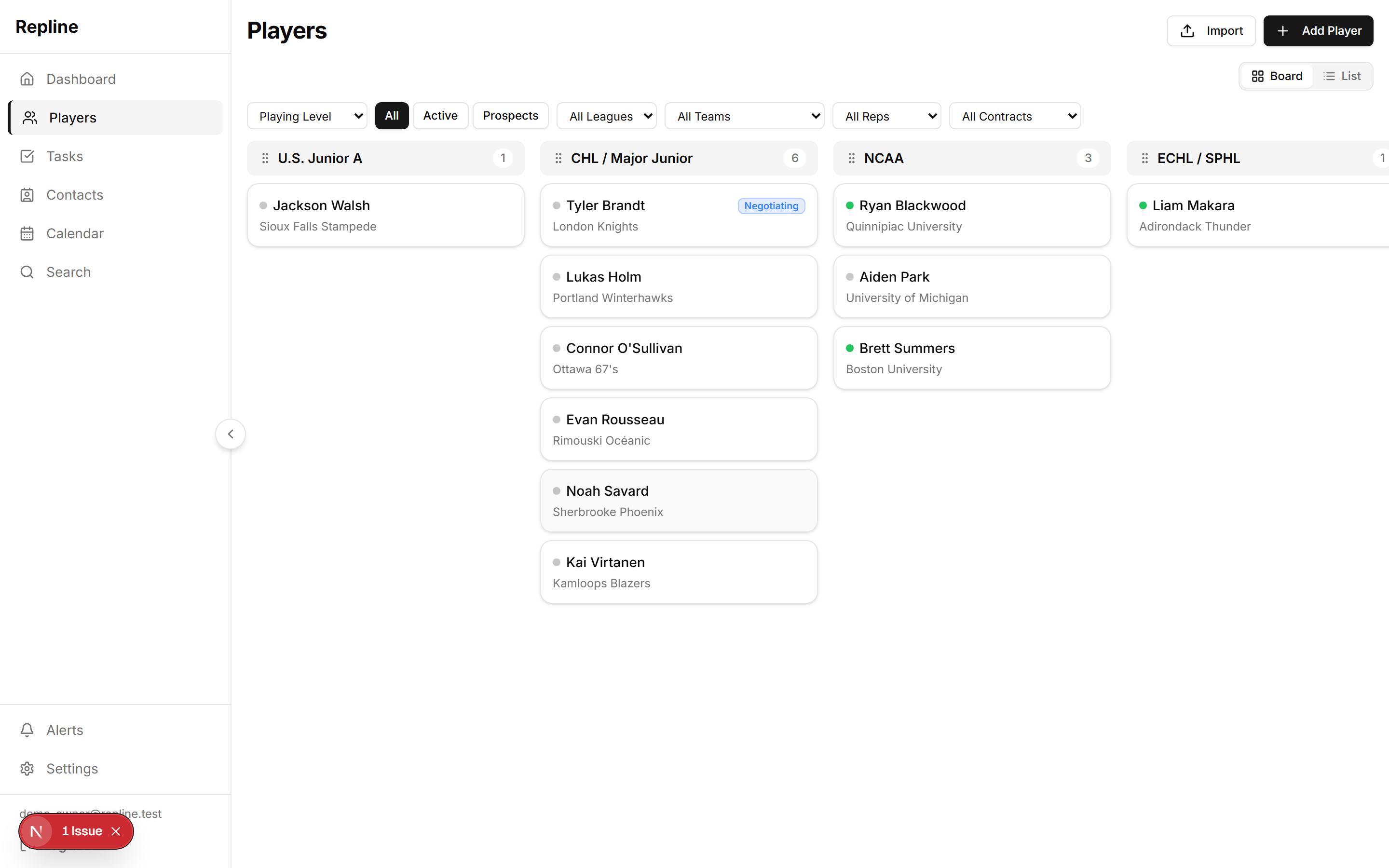
Every hockey agent manages a pipeline of players at different stages of development and representation:
Prospects
Players you're tracking but haven't signed. These are typically 14-17 year olds in minor hockey, the USHL, or early in their CHL careers. You're attending their games, meeting their families, and building relationships long before any formal agreement.
The challenge: you might be tracking 30-50 prospects simultaneously, each with different timelines, family dynamics, and development trajectories. Losing track of where you stand with a family — who you called last, what they're thinking, which programs they're considering — can cost you the relationship.
Committed / Advisory Clients
Players whose families have agreed to work with you in an advisory capacity. You're guiding their development pathway, helping with league selection, and managing relationships with coaches, scouts, and programs. No formal contract negotiation yet — but you're deeply embedded in their career decisions.
This is where contact cadence matters most. Families expect regular communication. Going cold for three weeks during a busy stretch of your season can erode years of trust-building.
Draft-Eligible
Players approaching the NHL, OHL, WHL, QMJHL, or USHL drafts. These clients require intensive attention — coordinating showcase appearances, managing interview prep, fielding calls from team scouts and GMs, and keeping families informed through a high-anxiety period.
The operational complexity spikes here. You might be coordinating with 5-10 teams for a single player, while managing the same process for multiple draft-eligible clients simultaneously. It's the stage where how many clients one agent can realistically carry stops being a theoretical question.
Signed / Active
Players under contract with professional or junior teams. Ongoing management includes contract tracking, performance monitoring, trade deadline awareness, and planning for the next contract cycle.
Even after a player is signed, the relationship management continues. Regular check-ins with the player, communication with team staff, and monitoring for off-ice issues are all part of the job.
Daily Workflow: What a Typical Week Looks Like
Monday
- Review the week's upcoming games for your clients and prospects
- Check contract expiration dates and compliance deadlines
- Review any overnight messages from players, families, or team staff
- Prioritize follow-up calls based on urgency and relationship cadence
Tuesday-Thursday
- Attend games (travel days for junior/college/pro schedules)
- Post-game calls with players and families
- Log interaction notes from every conversation
- Scout prospect games and update scouting reports
- Coordinate with skills coaches and development staff
- Handle inbound inquiries from teams and other agents
Friday
- Weekly status review: which players need attention?
- Update pipeline: any prospects moving stages? Any draft news?
- Compliance check: any deadlines approaching in the next 30 days?
- Prepare scouting reports or player packages for team distribution
Weekend
- Game attendance (junior, college, and pro schedules are heaviest on weekends)
- Family meetings (parents are available on weekends)
- Tournament and showcase attendance during key periods
Where Most Practices Break Down
The Spreadsheet Trap
Most agents start with spreadsheets. Player names in one tab, contacts in another, contracts in a third. It works for 5-10 players. By the time you hit 20, it's falling apart:
- Version control: Multiple versions floating between devices and team members
- No alerts: Contract expirations and compliance deadlines sit in a column nobody checks
- No mobile access: You can't pull up a player's contract status on your phone at the rink
- No relationship tracking: When was the last time you talked to Tyler's parents? Nobody knows
Communication Gaps
The most common failure in hockey representation isn't losing a contract negotiation — it's losing a family's trust because you forgot to call. Every interaction needs to be logged. Every follow-up needs to be tracked. Every relationship needs a cadence.
Agents who track this manually eventually drop the ball. It's not a question of if, but when.
When a family does leave, the reasons are usually about communication rather than outcomes — we went through why hockey players leave their agent, and what actually prevents it.
Compliance Blind Spots
Hockey has unique compliance requirements that generic tools don't understand:
- NCAA eligibility windows: CHL players pursuing NCAA options have specific compliance deadlines
- CHL import draft rules: International players face different eligibility timelines per the OHL, WHL, and QMJHL
- Contract filing deadlines: League-specific deadlines for player agreements with the NHLPA and league offices
- Transfer and waiver periods: Missing a deadline can cost a player an entire season
These aren't reminders you can set and forget. They're evolving rules that require purpose-built tracking.
How Agents Organize Their Contacts
A hockey agent's network is the foundation of their business. Every player comes with a constellation of relationships:
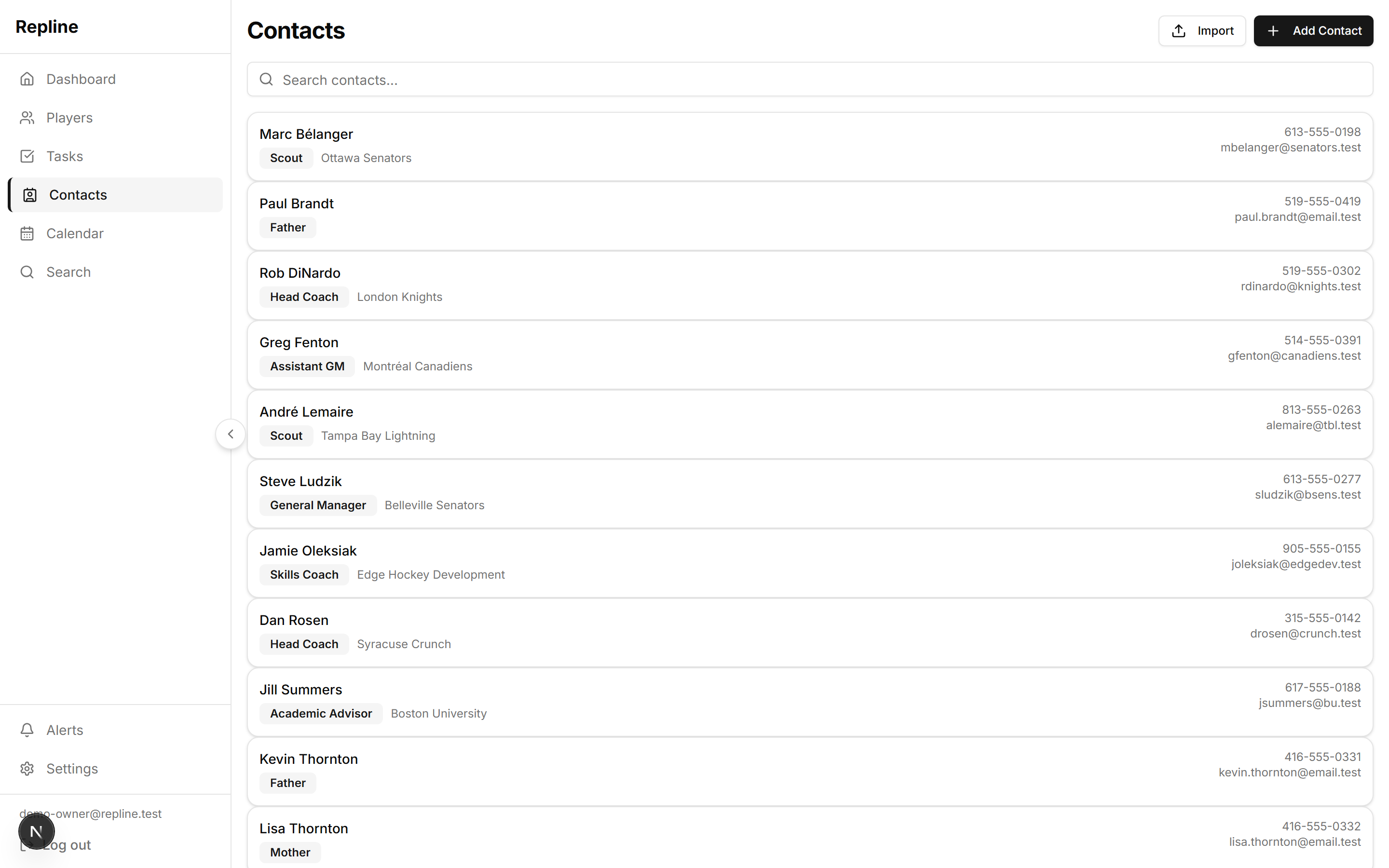
- Parents / Family: The primary decision-makers for junior-age players
- Billets: Host families for players away from home
- Coaches: Head coaches, assistant coaches, and skills coaches at current and potential teams
- Scouts: NHL, AHL, and junior league scouts tracking your clients
- General Managers: Team executives for trade, signing, and draft conversations
- Academic Advisors: For NCAA-track players managing eligibility and academics
- Medical Staff: Athletic trainers and physicians for health tracking
Each of these relationships needs to be tracked per player. A scout who's interested in one of your players might also be evaluating two others. A coach at one program might be a reference for a player transferring to another.
The relationship graph gets complex fast, and most agents manage it entirely in their heads — until they can't.
The Role of Technology
The hockey representation industry has historically been underserved by technology. The tools that exist fall into two categories:
Generic CRMs (HubSpot, Salesforce, Monday.com): Powerful but wrong. Their pipeline stages, contact models, and reporting are designed for software sales teams, not player representation. You spend more time configuring the tool than using it.
Spreadsheets and paper: The default for most agents. Simple to start, impossible to scale. No alerts, no mobile access, no shared visibility.
Purpose-built hockey agent software fills the gap. Platforms like Repline are designed from the ground up for the agent workflow — hockey-native pipeline stages, contact cadence tracking, compliance alerts, scouting reports, and agency oversight.
The right tool doesn't just organize your data. It prevents the operational failures that cost agents families, clients, and reputation.
FAQ
How do hockey agents keep track of all their players? Through a pipeline with distinct stages — Prospects, Committed and advisory clients, Draft-Eligible, and Signed or Active — because each stage needs a different kind of attention. A prospect needs relationship-building and patience. A draft-eligible client needs intensive coordination with five to ten teams at once. Managing every stage the same way is how agents lose the clients in the middle.
How many prospects does a hockey agent track at once? Thirty to fifty is common at the prospect stage alone, each with a different timeline, family dynamic and development trajectory — and that is before the committed, draft-eligible and signed clients who need active work. Losing track of where you stand with one family, who you called last and which programs they are considering, is what costs you the relationship.
What's the most common operational failure in hockey representation? Contact cadence. The most common way to lose a family is not losing a contract negotiation, it is losing trust because you forgot to call. Agents who track this manually eventually drop the ball — it is not a question of if, but when.
Who is in a hockey agent's contact network? Per player: parents and family, billets, head and assistant coaches at current and prospective teams, scouts across the NHL, AHL and junior leagues, general managers, academic advisors for NCAA-track players, and medical staff. One scout may be evaluating three of your clients; a coach at one program may be a reference at another. The relationship graph gets complex quickly, and most agents hold it in their heads until they can't.
Can you run a hockey representation practice on a spreadsheet? For five to ten players, yes. Past that it breaks in three predictable places: no shared visibility across advisors, no cadence tracking, and no compliance alerts for NCAA eligibility windows, CHL import rules or contract filing deadlines.
Key Takeaways
- Hockey agent work is 95% relationship management and operations, 5% contract negotiation
- The player pipeline has distinct stages that require different management approaches
- Contact cadence — knowing when you last talked to every family — is the most common failure point
- Compliance tracking (NCAA eligibility, CHL rules, contract deadlines) requires purpose-built tools
- Spreadsheets work for 5-10 players but break down as your practice grows
- The agent's contact network is a complex relationship graph that most manage manually
Ready to organize your practice? See how Repline works for hockey agents or compare it to your current tools.