Draft Day Prep Checklist for Hockey Advisors and Agents
A step-by-step checklist for hockey agents and advisors preparing clients for the NHL, OHL, WHL, QMJHL, and USHL drafts — from 12 months out to draft day.
Draft season is when everything your practice has built toward comes together. Whether your clients are entering the OHL Priority Selection or U18 Priority Selection, the WHL Bantam Draft, the QMJHL Entry Draft, the USHL Phase I/II, or the NHL Entry Draft, the preparation follows a similar arc — and the margin for error is thin.
This checklist walks through what needs to happen at each stage, from 12 months out to draft day itself.
12 Months Before Draft Day
Player Development
- Confirm your client's development plan for the season — on-ice and off-ice
- Coordinate with skills coaches on specific areas to improve before scouting intensifies
- Review game schedule and identify key showcase events and tournaments
- Ensure player is registered for relevant combines and evaluation camps
Eligibility Verification
- Confirm draft eligibility for each relevant league:
- NHL: Birth year requirements (players born by September 15 of the draft year minus 18)
- OHL Priority Selection: Players aged 15 by December 31 of the draft year
- WHL Bantam Draft: Players aged 14 by December 31 of the draft year
- QMJHL Entry Draft: Players aged 15-17
- USHL Phase I: Players aged 15-16 in the draft year
- Cross-check eligibility with NCAA requirements if the player is pursuing a dual pathway
- Document all eligibility dates and file them in the player's profile
Family Communication
- Hold a family meeting to set expectations for the draft process
- Discuss the range of outcomes — from first-round selection to going undrafted
- Align on communication preferences during the draft period (who gets updated, how often)
- Explain the timeline and what each phase involves
6 Months Before Draft Day
Scouting and Visibility
- Confirm your client is on scouting services' radar (Central Scouting, league-specific services)
- Identify which teams have shown interest — track scout attendance at your client's games
- Prepare and distribute updated scouting reports to interested teams
- Coordinate interviews with team scouts and development staff
Compliance and Documentation
- Verify that all player agreements and advisory contracts are current and compliant
- Confirm registration for league combines and evaluation events
- Check medical clearance status — any injuries need to be documented and communicated appropriately
- Prepare academic transcripts if NCAA eligibility is part of the picture
Logistical Planning
- Block travel dates for key events: combines, showcase tournaments, draft event itself
- Budget for travel costs (flights, hotels, meals) and communicate expectations with the family
- Identify backup plans if the player is injured or has scheduling conflicts
3 Months Before Draft Day
Team Engagement
- Proactively reach out to teams in the draft range where your client projects
- Schedule informal meetings or calls between team staff and the player/family
- Prepare the player for team interviews — practice common questions, discuss presentation
- Track every team interaction in your CRM: who called, what was discussed, follow-up needed
Three months out is late to be starting these relationships. The scouts and team staff who take your call in the spring are generally the ones you've been talking to all season — building that network is its own piece of work, and it doesn't happen during draft season.
Media and Mental Prep
- Prepare the player for potential media attention (social media presence, interview prep)
- Discuss draft day scenarios with the family — what if they go higher than expected? Lower?
- Connect the player with a mental performance coach if they're feeling pressure
Updated Materials
- Generate fresh scouting reports with current-season statistics
- Update highlight reels with recent game footage
- Ensure all materials are ready to send to any team that requests them on short notice
1 Month Before Draft Day
Final Push
- Confirm attendance at the draft event (player, family, agent)
- Arrange travel and accommodations
- Prepare a contact sheet: every team executive, scout, and staff member you might need to reach on draft day
- Review and update your prospect's pipeline status — where does each client stand?
Compliance Final Check
- Verify all eligibility requirements one final time
- Confirm that no rule changes have affected your client's status
- Ensure all advisory agreements are on file and up to date
Family Prep
- Final family meeting: walk through draft day logistics, protocol, and communication plan
- Discuss what happens immediately after the draft — contract discussions, development camp invitations, media obligations
- Set expectations for the post-draft period regardless of outcome
Draft Week
Draft week is the clearest stress test of how many clients a practice can actually carry — if you are triaging calls rather than working a plan, that is usually a capacity signal rather than a scheduling one.
3-5 Days Before
- Confirm all travel arrangements
- Touch base with key team contacts — any last-minute intelligence on where your client stands
- Prepare talking points for post-draft media (if applicable)
- Ensure your phone is charged, your contact list is updated, and you can be reached all day
Draft Day
- Arrive early at the venue or set up your watch location
- Stay in contact with team representatives throughout the process
- As picks are made, update the family in real time
- If your client is selected: coordinate immediately with the drafting team on next steps
- If your client is not selected: have a plan — undrafted free agency discussions, development options, and family reassurance
Post-Draft (48-72 Hours)
- Debrief with the player and family regardless of outcome
- For drafted players: begin discussions with the team on development camp, contract timeline, and assignment plans
- For undrafted players: initiate conversations with teams about free agent tryout contracts and development camp invitations
- Update all player records and pipeline stages
- Send thank-you messages to team staff who engaged during the process
Draft-Specific Timelines
NHL Entry Draft (Late June)
- Central Scouting midterm rankings: January
- NHL Combine: late May / early June
- Draft: late June
- Development camps: early July
OHL Priority Selection (June) — two separate events
- Draft lottery, setting the order for both selections: early April
- Registration deadline: January (varies by year)
- Combine: March
- U18 Priority Selection: a separate, online draft for players from Ontario U18 AAA programs. In 2026 it ran 8 June, two rounds, with every club required to select two players
- Main Priority Selection (U16): in 2026, round 1 on 12 June and rounds 2-15 on 13 June
- Don't merge the two on a calendar — they have different player pools and different dates
WHL Bantam Draft (May)
- Scouting window: September-March
- Draft: May
QMJHL Entry Draft (June)
- Registration: varies by year
- Draft: June (typically before NHL draft)
USHL Phase I & II Draft (Spring)
- Phase I: early May
- Phase II: late May / early June
FAQ
When should a hockey advisor start preparing a client for the draft? Twelve months out. The first year covers development planning, eligibility verification and setting family expectations. Six months out is scouting visibility, compliance documentation and logistics. Three months out is team engagement, media and mental preparation, and refreshed materials. Most of what happens in draft week is executing decisions made much earlier.
What are the main junior and pro hockey draft dates? The NHL Entry Draft is in late June, the OHL Priority Selection in June — preceded by a separate U18 Priority Selection, and by the lottery in early April — the WHL Bantam Draft in May, the QMJHL Entry Draft in June, and the USHL Phase I and II drafts in spring. Dates move, so confirm each against the league rather than working from last year's calendar.
What are the age requirements for junior hockey drafts? They differ by league. The NHL requires players born by September 15 of the draft year minus 18. The OHL Priority Selection takes players aged 15 by December 31 of the draft year, the WHL Bantam Draft players aged 14 by the same date, the QMJHL Entry Draft players aged 15 to 17, and USHL Phase I players aged 15 to 16 in the draft year. Confirm each against the league directly, and cross-check NCAA requirements if the player is on a dual pathway.
What should an advisor do in the 48 to 72 hours after the draft? Debrief with the player and family regardless of the outcome. For drafted players, open discussions with the team on development camp, contract timeline and assignment plans. For undrafted players, start conversations about free agent tryout contracts and development camp invitations. Then update every player record and pipeline stage, and thank the team staff who engaged during the process.
What happens if a client goes undrafted? You should already have a plan before draft day, because the conversation starts within hours: undrafted free agency discussions, development options, and reassurance for a family that has just had a hard day. Setting the range of outcomes with the family twelve months earlier — including going undrafted — is what makes that conversation survivable.
Tools for Draft Season
Draft season amplifies every operational challenge in your practice. You're managing more communications, tighter deadlines, and higher stakes across multiple clients simultaneously.
The agents who navigate it smoothly are the ones with systems — not the ones relying on memory and text threads.
Repline tracks every player's eligibility dates, every team interaction, every family communication, and every compliance deadline in one place. When a scout calls about a prospect at 9 PM on draft night, you can pull up everything you need on your phone.
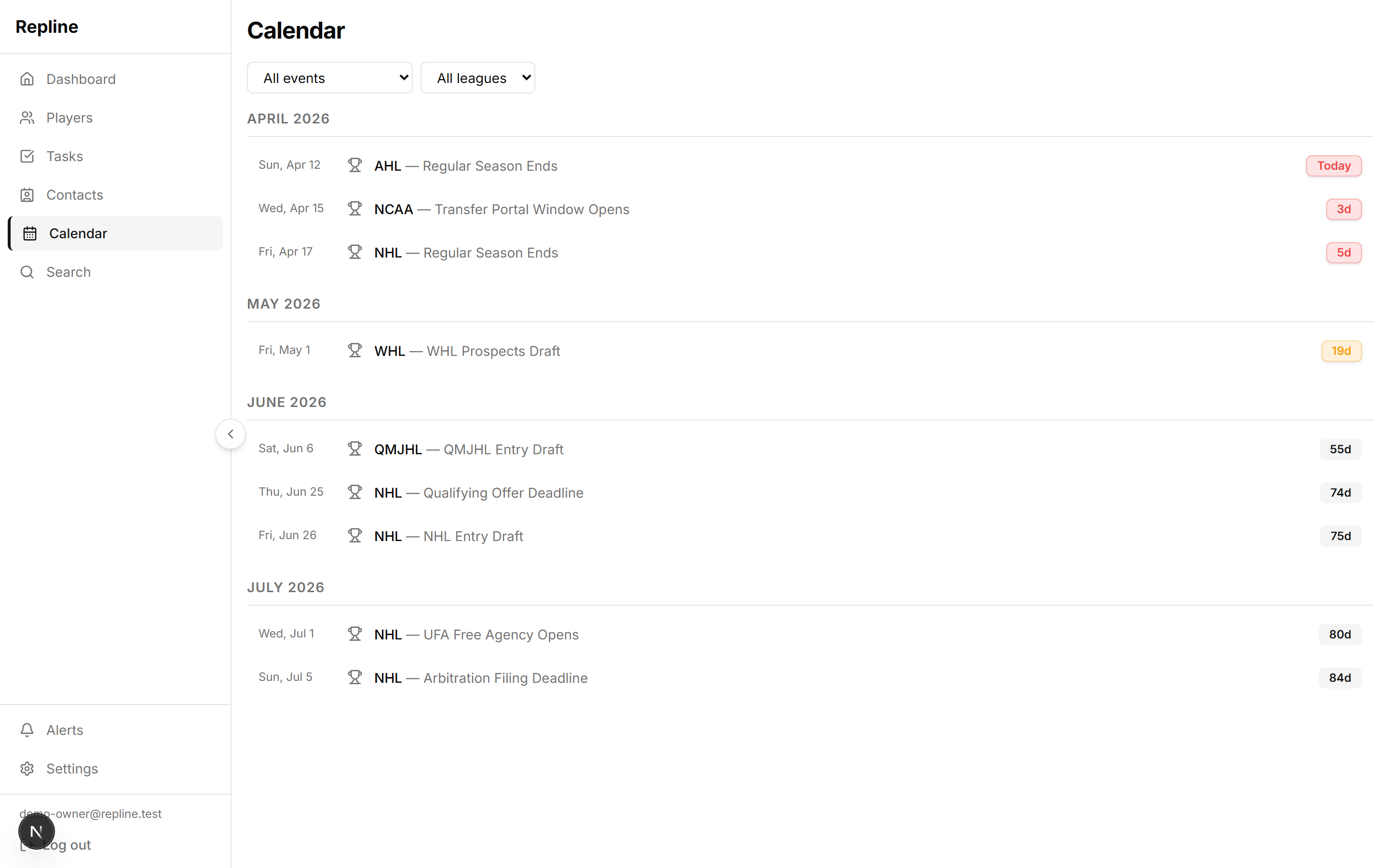
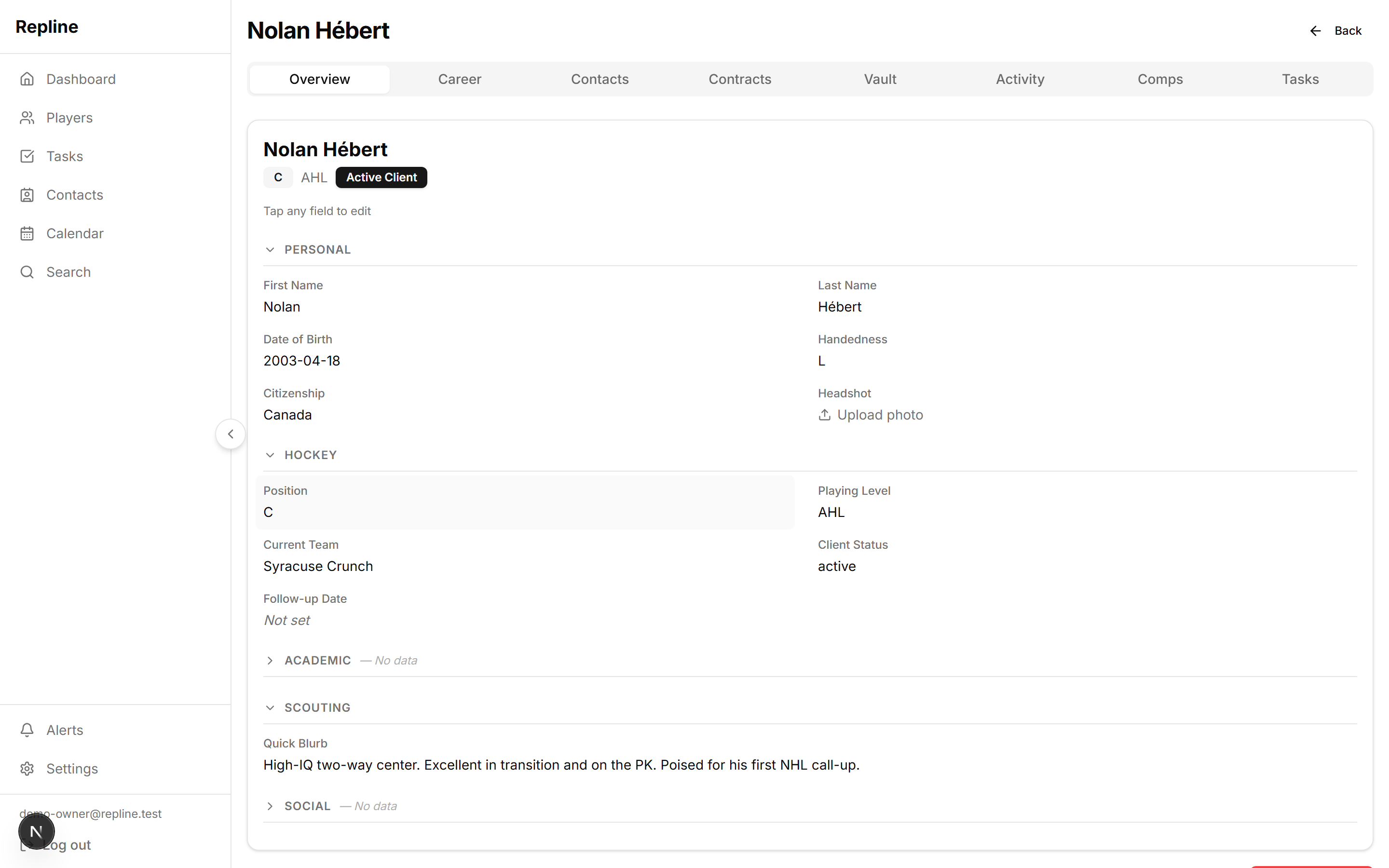
See how it works for player management or start a free trial.